The Unlikely Aviator
In high school, I wasn’t a particularly industrious student, being easily distracted by activities far more enjoyable than opening an algebra book. I spent an inordinate amount of time sketching cartoons in class, and would occasionally get sent to the housemaster’s office. This made test time challenging, but I wanted to be a professional animator, not a mathematician. I was, however, a voracious reader and quite curious about things. That was my salvation.
I remember visiting my uncle's house one day with a friend. My uncle worked for the FAA. He was sitting before stacks of intimidating-looking flight manuals, holding a circular slide rule—an E6B, or what pilots dubbed a “whiz wheel.” Like me, my friend would go on to become a professional pilot. But at this point in our lives, we glanced at each other with pleased smiles, relieved that the mental effort required to pilot airplanes—or helicopters— was not to be our burden.
A year or so later, I was flying off the East Coast, on a Northeast Airlines Yellowbird B-727, on my way from Boston to Miami. I was heading south to visit my grandparents at their winter home and remember staring from my cabin window, observing the flickering coastal lights, and feeling a stir of excitement. I dismissed it.
Several minutes later we banked gently west, towards the Miami coastline, entering the final approach phase of flight. I recall the long, dull gray wing, the ghostly reflection of the green starboard wingtip navigation light, and the whisk and bumps of passing cumulus clouds. The slowly increasing size of the flickering coastal lights, now magically seemed attached to recognizable forms: hotels and condos. It reminded me of a beautifully choreographed dance. Like Ulysses, I was definitely hearing the siren’s call, but immediately recalled my uncle’s books and his E6B and tried hard to dismiss it. I remembered Ulysses’ fate, and I was still a bit of a slacker. The last thing I wanted to do was math.
Taxiing to the gate, I peered from the window. The confused array of dizzying lights enveloping the aircraft mesmerized me: yellow, green, blue, red— some flashing, most steady. I remember wondering, how could anyone decipher this confused kaleidoscope?
Eventually, I made my way through the crowded cabin, and as I approached the cockpit door, I noticed the grinning pilot adjusting his tie in the cockpit door mirror. Behind him a panel full of bright lights shone in the dim cockpit. He nodded that airline pilot nod at me, and I immediately wanted to know what he knew. The dreaded flying bug had bitten me deeply, in spite of my uncle’s unintentional warning and Ulysses’ tragic fate.
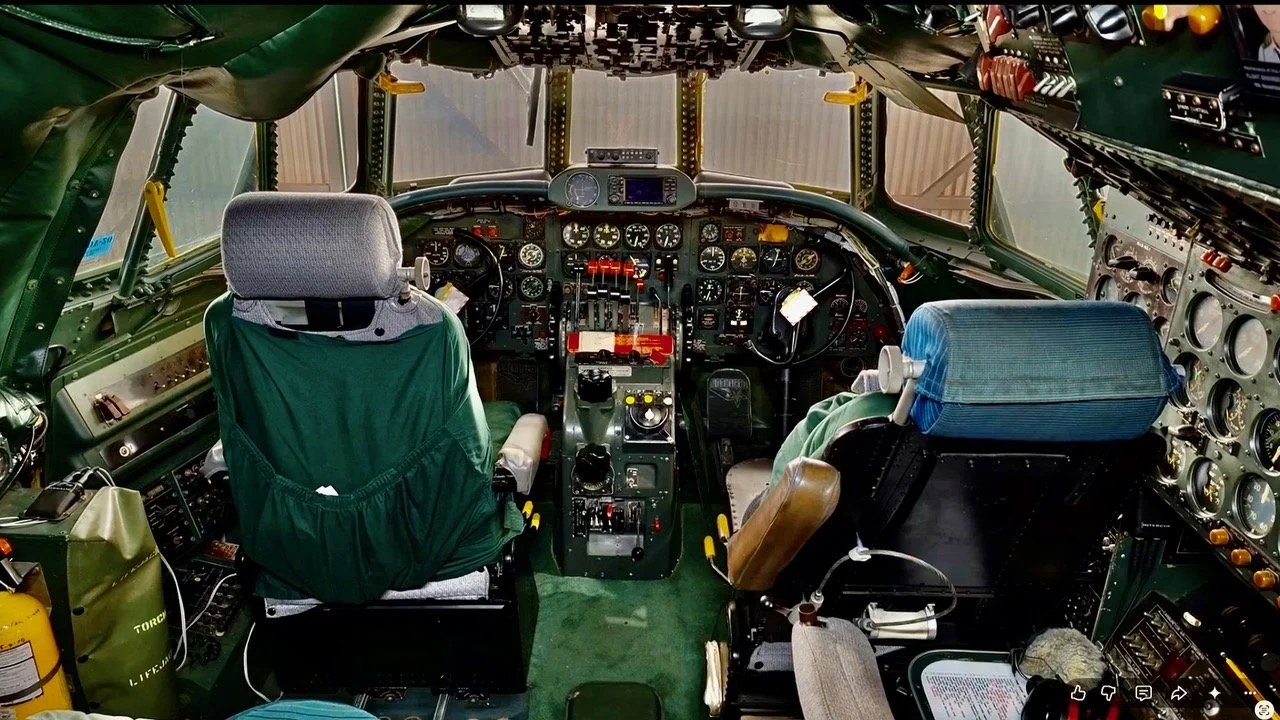
One last event, probably an omen, involved a flight many years earlier— again to visit my grandparents, this time accompanied by my mother. I was about eight years old, and the aircraft we boarded was a classic four-engine, propeller-driven Lockheed Constellation. With its distinctive triple tail and pressurized cabin, it was an aircraft that revolutionized aviation in that era—and one we traveled on yearly.
After we landed, I approached the cockpit door and glanced in, as I always did. The captain was getting up from the left seat. He glanced at my mother, then at me, and asked if we’d like to see the flight-deck. My mother was a beautiful woman, and after a career as an airline pilot, I now understand the true motivation of his invitation. I can tell you it probably wasn’t me—but that's an entirely different story.
I recall staring at all the cockpit gauges and was particularly impressed by the throttle levers and bulky switches. I thought some of the levers resembled different colored lollipops. It was an image that remains with me to this day. I recall the smiling crew, and how gratified they appeared. I often wonder if that image was sitting firmly in my subconscious, just waiting for the right moment to ‘take wing.”
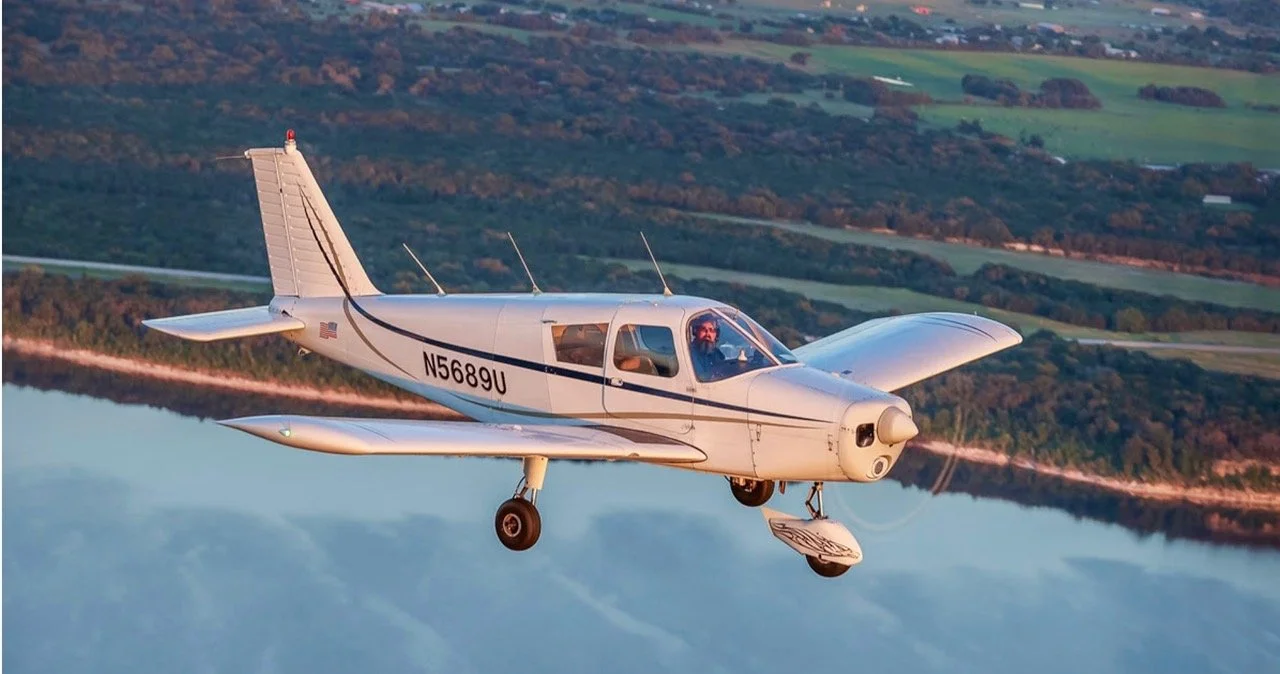
Eventually, I took my first light-airplane flight in a Piper Cherokee 140, ironically with my uncle, who had finally earned his private license. All that study paid off for him. Now it was my turn.